Is Funding for the Fine Arts Being Cut in Schools
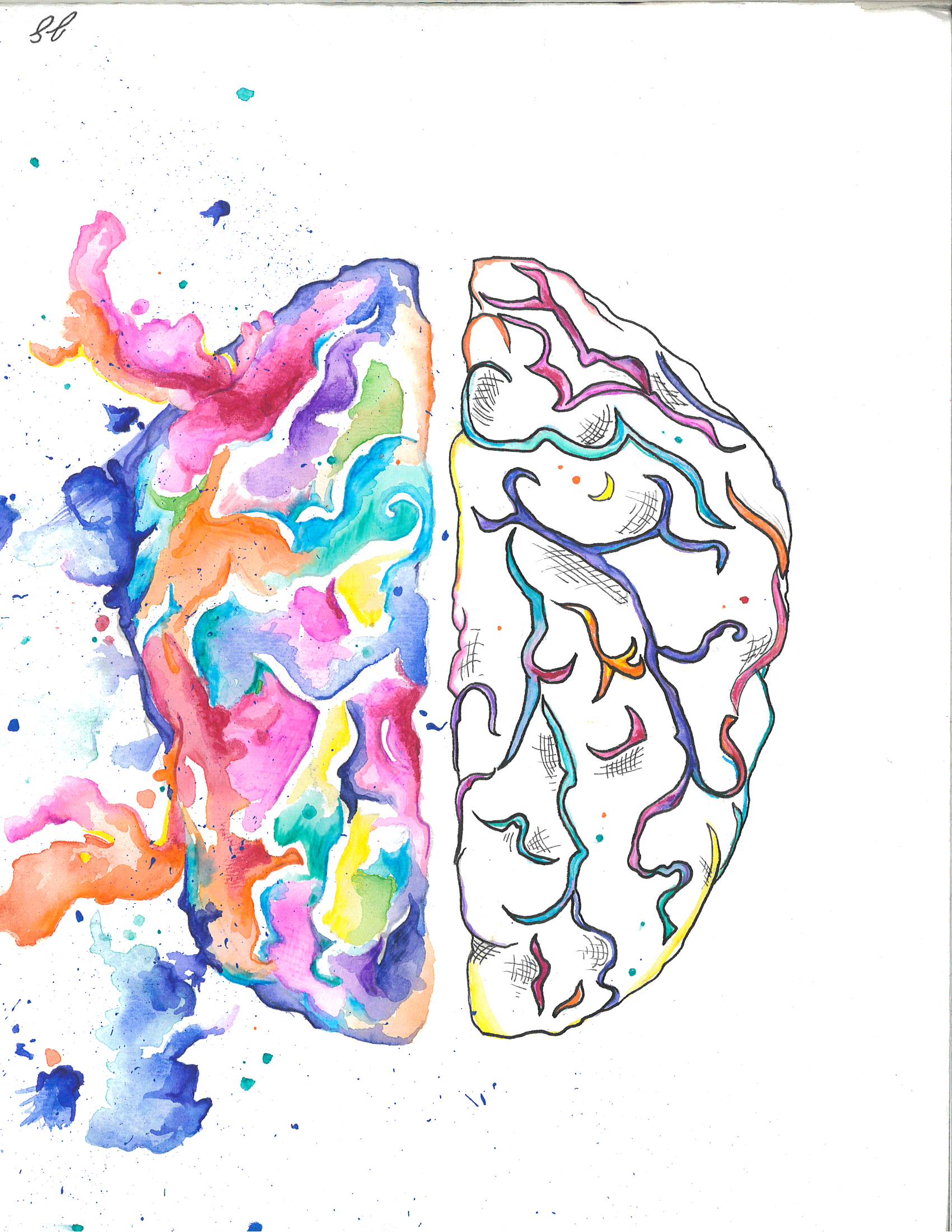
Art by Hashemite kingdom of jordan Smith
"The arts and the humanities belong to all the people of the United states."
President Lyndon B. Johnson gave this sentence power by signing the National Foundation on the Arts and Humanities Deed of 1965.
However, equally states continue to cut school funding and coin toward public pedagogy declines, investment in the arts is striking specially hard. The arts can be transformative in the lives of children simply they are often under the threat of budget cuts and demanding bookish testing. In response, nonprofits, students and teachers have mobilized to advocate for the importance of an arts educational activity.
The National Assembly of State Arts Agencies (NASAA) is a professional clan that represents the nation's state and jurisdictional arts agencies. This nonprofit advocates for public support of the arts in the United States. Since the 1960s, it has surveyed land arts agencies twice per year for updated acquirement data.
Their most recent written report for the 2019 fiscal yr shows that after adjusting for inflation, art funding throughout the years has decreased 43.4 per centum.
This year, Los Angeles teachers went on strike for the first time in xxx years, many of them fighting for better resources, including for the arts.
"It's all for the students, and I would do annihilation for my students," uncomplicated schoolhouse teacher Alex Williams said. "The fight is for them, for amend resources in their classroom and for public education."
Williams, 32, teaches at Woodlake Avenue Elementary Charter Schoolhouse in Woodland Hills and is one of the many teachers around LA who marched for better school funding and higher pay.
Williams grew up attention public schools. She worries nigh the future of didactics if students don't receive all of the resources they deserve.
Art is well-nigh tomorrow
It is challenging to prove that an arts education is needed, every bit there aren't standardized tests that can quantify its value, said Carrie Birmingham, associate professor of instructor pedagogy at Pepperdine.
"Art funding gets cutting because standardized testing doesn't examination information technology," Birmingham said. "In loftier stakes testing, if the kids don't do well in math and English language, then all kinds of bad things happen."
Contradictory research almost whether or non an arts education improves academic performance results in tradeoffs when schools don't perform well academically.
"[Schools] can't give them an hour a week for arts teaching considering their test scores are low," Birmingham said.
Birmingham said regardless of whether or not practicing art raises test scores, the arts are valuable on their ain.
"There'south just so much homo value in the arts … We enjoy arts every single 24-hour interval," Birmingham said. "We become into buildings that accept been designed to be beautiful and nosotros read things and we even similar the more commercial arts that people work hard to make cute and functional."
Funding the arts
Funding for the arts is complex. In the U.S., the art industry is not controlled by a single person or bureau. Instead, a combination of federal, land, regional and local agencies provide financing for the arts.
The National Endowment of the Arts is the largest unmarried funder of the arts in the U.South. However, the coin it awards is meant to complement arts funding, not supercede information technology. This requires recipient organizations to also receive funding from non-federal contributions.
1 organization that receives funding from the NEA is the local nonprofit California Fine art Educational activity Association.
"Creativity isn't optional; students who are not visually literate and culturally literate tin can't thrive in a global world," said Robin Gore, president of CAEA. "We're at a astringent disadvantage without funding."
For thousands of art educators in California, CAEA provides a network for them to communicate and champion the importance of visual arts. Since 1965, CAEA has helped support pre-K through university educators working in all areas of visual arts.
"Nosotros hold conferences, nosotros take networking, we have area connections where people can get together and network, collaborate, work together," Gore said. "Because typically near arts educators in any area are very isolated and siloed and they don't have the chance to collaborate."
Gore said a growing source of funding for nonprofits comes from patrons of the arts. While foundation and government funding accept go increasingly difficult to receive, private gifts have become a significant source of support for nonprofit arts organizations. The growth in revenue shows how more people are beginning to fill the hole left by decreased government funding.
Arts for LA is a nonprofit that promotes access to the arts for every student in Los Angeles County. The organization campaigns to maintain public funding for the arts, works to increase access to arts education for public school students and builds public support for the arts.
"Arts for LA was really funded by a group of fine art leaders considering at that time in 2006, the LA City Section of Cultural Affairs budget was on the chopping block," said Jennifer Fukutomi-Jones, director of programs for Arts for LA. "The nexus of this organization started out of a required demand. We had to have action immediately."
Lack of funding hinders creativity
Gore said a turn down in arts funding has a lasting impact on students.
"It's very vital that students take access to an arts education and that they accept access to it early, because waiting until they're [in] high school to develop and find these skills is too late for them to be competitive," Gore said.
For Fukutomi-Jones, non having access to an arts instruction while in schoolhouse meant discovering her career path later than most.
"I was actually a very tardily bloomer in my art career," Fukutomi-Jones said. "I went to LAUSD [Los Angeles Unified School District], and throughout my education, I actually did non have any access to arts education."
In high schoolhouse, Fukutomi-Jones attended her first play past chance. When her teacher had an extra ticket to "Othello," she decided to take it.
"It was the first play I went to, and I never looked back," Fukutomi-Jones said. "I idea I was going to be a lawyer, I idea I was going to go down a very different career path, and as soon I was exposed to that experience, it changed my life — literally."
Arts increases career opportunities
Pepperdine senior Tammy Hong said her family'south appreciation of visual design helped shape her passion for art.
"My mom is a huge influence in my life," Hong said. "She e'er tells me, 'You need to be a artist out at that place because that's what the world is craving.'"
When Hong was 4, her mother and aunt opened a pocket-size interior design business named JS Interior Design.
"I remember sitting around in the living room and my aunt would be drawing designs," Hong said. "I would try to re-create her and depict with her. I constitute a lot of enjoyment in that."
Despite going to individual schoolhouse her entire life, Hong was aware of the cuts in arts funding happening in public schools.
"I always saw it happening around me," Hong said. "Luckily for me, in my private loftier schoolhouse there was also an art class and I had the option to exist an AP art student and to go along to pursue my passion."
Santa Monica Community College freshman Lily Larsen said she personally experienced the disparity in arts funding from higher income to lower income school districts.
"I remember comparison Pali [Palisades Charter High School] to Dorsey [Susan Miller Dorsey Senior Loftier School], which is in my neighborhood, and seeing Pali have all these arts programs while Dorsey was struggling to go an art instructor," Larsen said.
Larsen said she grew up participating in a theatre group and saw the positive furnishings of the arts in communities and on people.
Witnessing a lack of arts education for those in her community, Larsen was inspired to join the Student Eye Theatre Grouping, a plan that aims to educate youth almost arts advocacy.
"Me and a few of the high schoolers organized an arts advocacy summit and we got almost 500 kids from LAUSD to participate in workshops emphasizing the importance of arts in our schools," Larsen said.
Seeing the work and outreach that local nonprofits have in communities like hers made Larsen desire to abet for her community at greater levels.
"I'm running for a seat in City Council District 10 to exist a councilwoman," Larsen said. "I think that number one, our schools need to provide more than opportunity and more resources when it comes to the arts."
An arts educational activity, Fukutami-Jones said, is incredibly important in providing opportunities to foster creativity.
"The arts is not just for our people — it'southward for everyone," Fukutami-Jones said. "Information technology makes our community stronger and more vital if each person and every educatee has that critical part of their education."
Follow Araceli Crescencio on Twitter: @aratells
Source: https://pepperdine-graphic.com/how-do-declining-funds-for-art-education-affect-aspiring-artists/
0 Response to "Is Funding for the Fine Arts Being Cut in Schools"
Post a Comment